
Media Strategy
Choosing Between Display, Native and Social Formats
How to compare display advertising, native placement, sponsored editorial and social activity without treating every format as interchangeable.
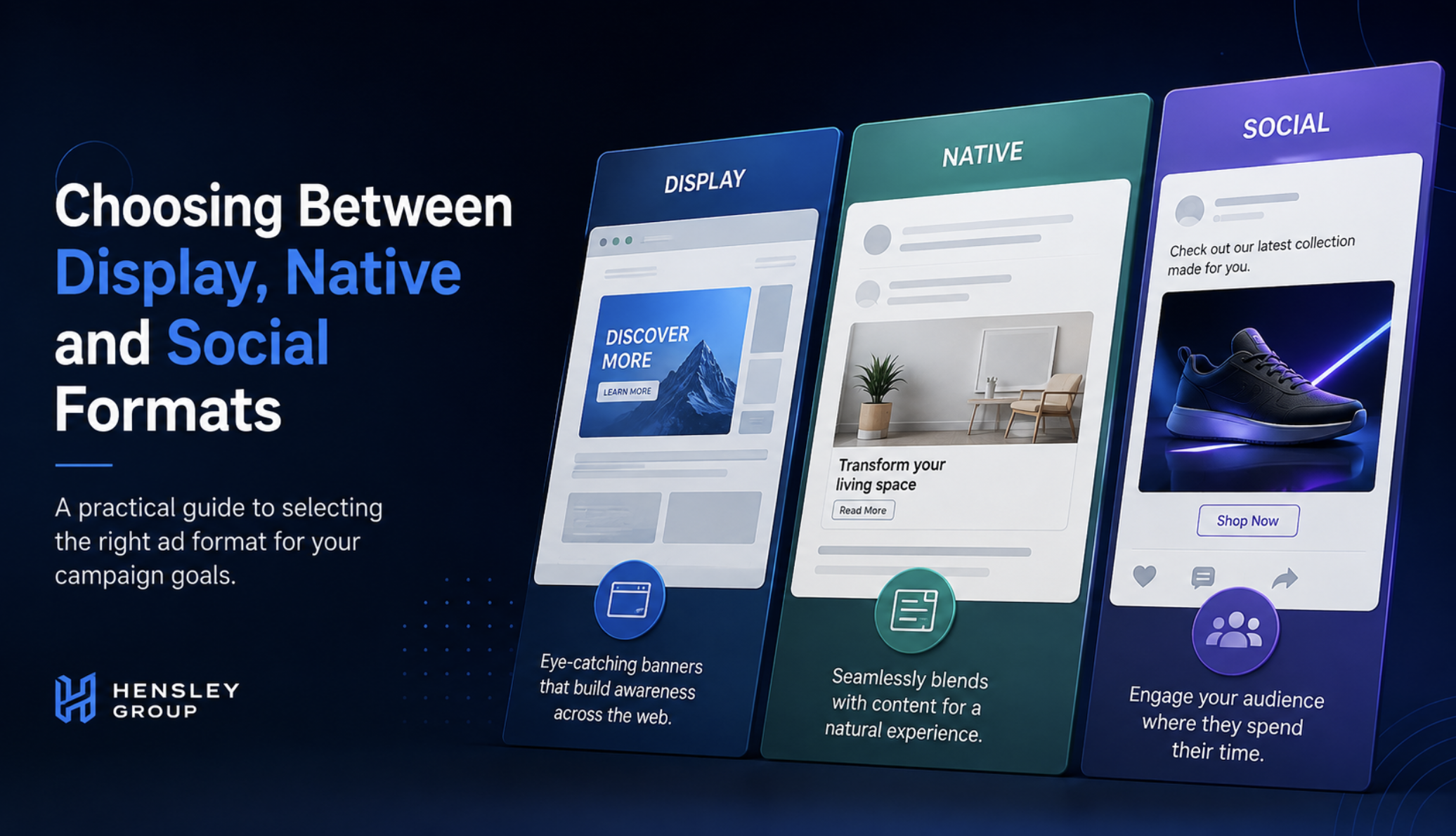
Start with the objective
Format selection should begin with the objective, not with a familiar media label. An advertiser looking for visible sponsorship in a relevant environment may need a different approach from an advertiser trying to explain a product, support a launch or coordinate activity across several communities.
The objective does not have to be reduced to a single metric. It should explain the audience, the target markets, the message, the timing and the decision the campaign is intended to support. That gives the media plan a practical anchor.
Audience behaviour
Different formats meet audiences in different moments. Display placements may sit around content while a person is reading or browsing. Native placements and sponsored editorial can provide more room for explanation. Social activity can work through familiarity, timing and community context.
This does not make one format automatically stronger than another. It means each format should be judged against the way the audience is likely to encounter it and the level of attention the message requires.
Display advertising
Display placements can create visibility in a defined environment. They work best when the placement, device treatment and creative specification are understood before launch. A desktop hero banner, mobile placement and in-content unit can each behave differently.
The limitation is that display rarely explains a complex offer on its own. Creative needs to be concise, legible and suitable for the page around it. The advertiser should also understand what delivery information the publisher can provide.
Native placement
Native placements can be useful when the message benefits from fitting more naturally within a content environment. They may appear as recommendation units, in-feed placements or content-led promotions, depending on the publisher.
The key is transparency. Commercial content should not be designed to mislead readers about its nature. The format, labelling and approval process should be agreed before launch.
Sponsored editorial
Sponsored editorial can help when a subject requires explanation, education or a more detailed narrative. It gives the advertiser room to set out context, features, eligibility or practical considerations.
It also requires care. The publisher may have editorial standards, disclosure requirements and restrictions on claims. The advertiser should provide accurate information and avoid unsupported promises.
Social activity
Social activity can support reach, conversation and familiarity when it is planned around an appropriate channel or creator. It can also help a wider campaign feel more coordinated by giving the message more than one point of contact with the audience.
Social work needs clear deliverables. Posts, stories, creator roles, moderation expectations, approval deadlines and promotional conditions should be written down before activity starts.
Combined campaigns
Many campaigns benefit from combining formats. Display can provide visibility, sponsored content can provide detail and social activity can extend the message into a community. The combination only works when the parts have a shared purpose.
Combining formats should not become a way to add complexity for its own sake. Each element should have a role, an owner and an agreed review method.
Practical takeaways
Choose the format that fits the objective, audience behaviour and approval requirements. Confirm the placement, creative rules, reporting availability and limitations before launch. Avoid treating metrics from different formats as if they always mean the same thing.
Related articles

How to Brief a Multi-Channel Social Campaign
A practical briefing framework for advertisers planning social activity across creators, communities and wider media placements.

Why Direct Publisher Relationships Still Matter
A practical look at where direct publisher relationships remain useful, where they are limited and how advertisers can approach them responsibly.
